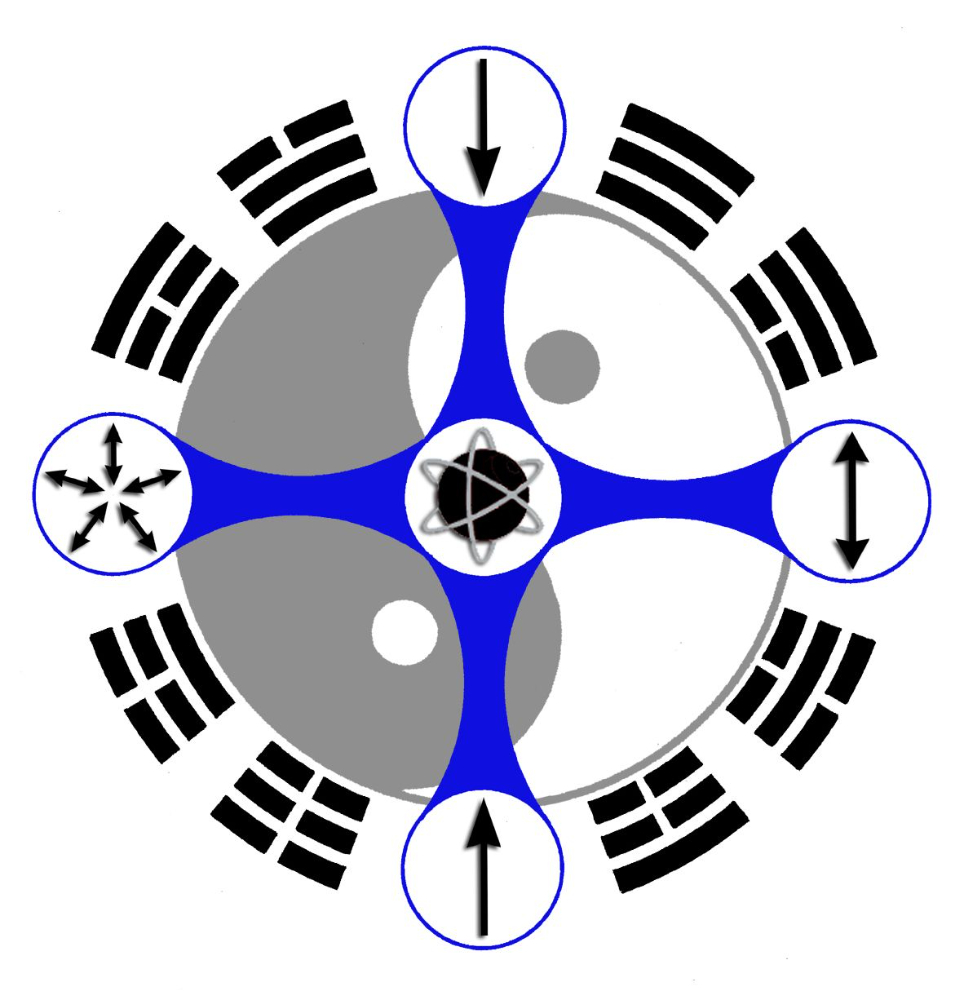
Water Method Blog
Taoist Philosophy, Neigong and Meditation, Medical Qigong, Tai Chi and Bagua
By TTCS Senior Instructor Jackie Smith
When I first saw titles like this one, I thought, “Sign me up for some of that”! Now though, I can’t even remember how long I’ve been attempting to wrap my brain cell around the concept and training to embody these simple yet profound words. There are in...
I’m pleased to have teamed up with MysticMag to discuss physical and mental well-being in this age of anxiety, depression and chronic pain. I hope you find the post useful: click here to read.
By Paul Cavel
In a previous post I offered exercises for opening up the musculoskeletal frame in a coordinated fashion to create space in your body. As you begin to feel a sense of more space, you want to transition your focus from the muscles to the nerves.
In order to target nerve flow, you w...
By Paul Cavel
When learning any internal energy art, such as qigong, tai chi or bagua, there is a major hurdle that must be overcome to create sustainable, long-term training results: feeling instead of visualising. I’ve watched how this has become more and more difficult for students over the ...
In this video, I meet with my friend and fellow Water Method teacher Jason Roberts to discuss how to practise to cultivate qi and manifest the energies of the Five Elements.
We discuss:
-
Where to put your focus and strategies for practising the Water Method as it is comprised of five neigong
...
In this video, I discuss bending-and-stretching neigong and lengthening neigong, and how they become one.
Wu wei is often translated literally, based on the Chinese characters. But Water Method practitioners have a much different understanding of the Taoist concept of wu wei. Following the principles of water, it starts with the physical body and goes through the Three Treasures, the Taoist path of a...
In this video I discuss how to develop your awareness.
By Paul Cavel
PART 2: What Is Wu Wei?
Wu wei is often described as “doing without doing”, but what does that really mean? How can you do something without doing it? This misunderstanding is generally due to scholars outside the tradition translating Chinese characters into English,...
By Paul Cavel
You are being bombarded by noise – unrelenting distractions in the form of notifications, news and marketing – that diminish peace of mind. It’s no wonder why stress is the number one cause of disease with 90 percent of illnesses and diseases being linked to chronic stress (accor...
By Paul Cavel
In ancient times, internal arts training often started just before dawn and was usually done outside. Taoists found that morning practice not only warms up the body’s systems by circulating blood and chi, but also wakes up the intuitive aspects of the mind. Starting the day on soli...
The Yang style tai chi form that I teach is derived from that of Yang Cheng Fu, a direct descendant of the Yang family, as I consider it a superb balance between ease of learning and depth of internals, making it a practice well-suited to both new and existing students alike.
The internal techni...
Creating Circular Forms
The specialty of Tai Chi Circling Hands is developing circularity.
Circularity is a big deal in the internal arts and it gets talked about a lot. But when you go to practise your form, there’s a lot of complexity involved — not just with the choreography, but also nei...
The Wu style is considered by many to be the deepest style of tai chi. Initially designed to become a form of moving meditation, the Wu style serves as a container for all 16 Taoist neigong. This small-frame style is capable of driving neigong deep into the body, but requires the body to be relat...
By Anna Price
In this especially bleak midwinter, many of us will be hauling Christmas Trees into our living rooms and festooning them with lights and trinkets to help gladden our hearts. We all seem to love a bit of fir - its dark green and resinous smell closely associated with seasonal festi...

By Paul Cavel
In Part 1, we explored the peaks and plateaus in training both external and internal forms of exercises, and why you should not be discouraged when you recognize you have reached a plateau.
The Taoist Principle That Saves the Day
When you hit a plateau, that is the time when you m...
By Paul Cavel
In the manifest realm of duality, if there is an action, there is an equal and opposite reaction: an opening is followed by a closing, and the cycle repeats ad infinitum. In Taoism, the directive of all closing phases – both during practice and in life in general – is to let go and...
By Paul Cavel
Separate and Combine is a Taoist principle for deep learning that has been used for millennia. The principle states that once a basic movement, set or form has been absorbed or established, the practitioner seeks to tease out the individual components before moving on to study that...
Follow The Tai Chi Space
... and join our growing TTCS community!