How to Develop the Yin & Yang Qi of the Body in Tai Chi & Bagua (1/2)
Sep 10, 2026
Part 1 of 2: Find Your Root in Foundational Neigong
By Paul Cavel
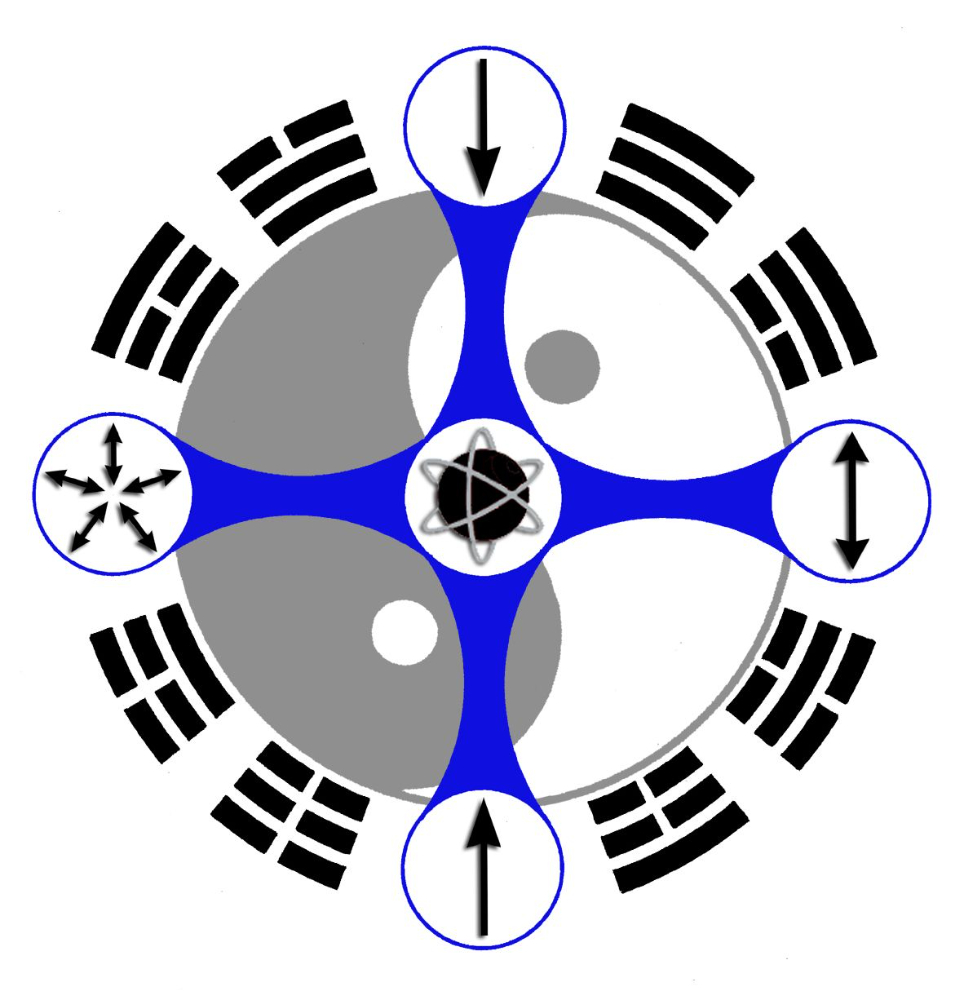
In China the number eight is regarded as auspicious and it gets applied to just about everything, from feng shui and good luck charms to the ancient philosophy of the Tao. According to the I Ching (Book of Changes), eight primary energies, called "trigrams", govern all of manifestation — in all times, all places and all dimensions. This is the philosophy that lies at the heart of Taoism.
The number eight also figures prominently in Tibetan Buddhism where, for example, the Dharma Wheel is often depicted with eight spokes to represent the Eight-fold Path or the Eight Paths to Enlightenment. The Gnostic Wheel of the Year, indicative of the never-ending cycle of the sun's growth and retreat, represents the microcosm and macrocosm of all life cycles of the universe and is celebrated with eight annual festivals. Christians also view eight as significant since, after six days of creation and the seventh day of rest, the eighth day symbolises new beginnings in the unfolding, manifest realm.
How the number eight came to assume its position over other numbers is an interesting question for debate, but in terms of the philosophy and practice of Taoist arts, there is little controversy. The number eight figures in almost every aspect, from the construction of formwork and the content that powers forms, to the energetic makeup of the human being who practises the arts, as well as the cosmic forces that mould and give shape to reality as we experience it.
Neigong Is the Fabric of Tai Chi & Bagua
The very fabric of Taoist arts is weaved from neigong threads that intertwine to create the internal structures and external forms of qigong, tai chi and bagua. The same 16 neigong threads can be weaved in very different ways to generate radically different practices and training results. However, the neigong system is split into two categories, which yields eight yang and eight yin methods. That is to say each neigong component naturally develops either the yang or yin qi of the body and, as a whole, every thread contributes to an intimate and delicately balanced lattice.
Being that neigong is divided into half yang and half yin, one might reason that, at least from a superficial perspective, yang neigong threads would dominate bagua, while yin neigong threads would dominate tai chi. But any tai chi or bagua practitioner who has done their homework knows that this is far from the case.
Stage One: Developing Yin & Yang Neigong
To start, each neigong component is either yang or yin by nature; that is to say, when you have developed some level of control over any particular technique, it will produce a predominantly yang or yin quality and energy, depending on its intrinsic value. Two examples of yin neigong are the Dissolving processes (both Outer and Inner Dissolving) and opening-and-closing techniques (a.k.a. “pulsing”); whereas, bending and stretching of the soft tissues and spiralling energy currents throughout the body are examples of yang neigong.
When any neigong technique is learned, chances are you will initially approach it in a yang fashion, as you are trying to “make” something happen. With time and a sustained effort, you can sink into any neigong thread and realise its nature — through direct perception — whether yang or yin. Arriving at this stage constitutes the first stabilisation for developing experiential knowledge of Taoist arts training, an absolute minimum requirement to go deeper inside and begin playing in the realms of subtlety. This stage is generally done through qigong.
Stage Two: Weaving Neigong
Once this grounding is established with any neigong thread — that is understanding of both its function and nature, and a certain degree of control can be maintained from some level of embodiment — only then can you weave relevant threads into a single fabric through your form. This is what underpins the baseline internal motion in tai chi versus bagua, and begins to separate the two through the application of the intent: softness in tai chi and strength in bagua.
This stage of development is followed by the process of adjusting weaves to the specific requirements of either tai chi, bagua or both, where your skill must once again come up a notch. Unifying neigong in tai chi and bagua is far more difficult than in simpler qigong forms. The training hierarchy necessitates sustained practice and effort, and if you try to shortcut any part of the progression or jump ahead too quickly, whichever techniques you attempt will collapse your energetic framework like a house of cards. This is why many long-time internal arts practitioners and indeed instructors do not reach advanced levels of practice. A weak foundation simply cannot support the heavy load of advanced neigong methods.
Never stop practising the fundamentals and returning to the beginning, and you’ll watch your skill set grow and evolve, giving you more qi to play with. In Part 2, I’ll discuss how to play the range of the yin-yang spectrum in both tai chi and bagua.